
Compression Therapy for Legs: Circulation & Recovery
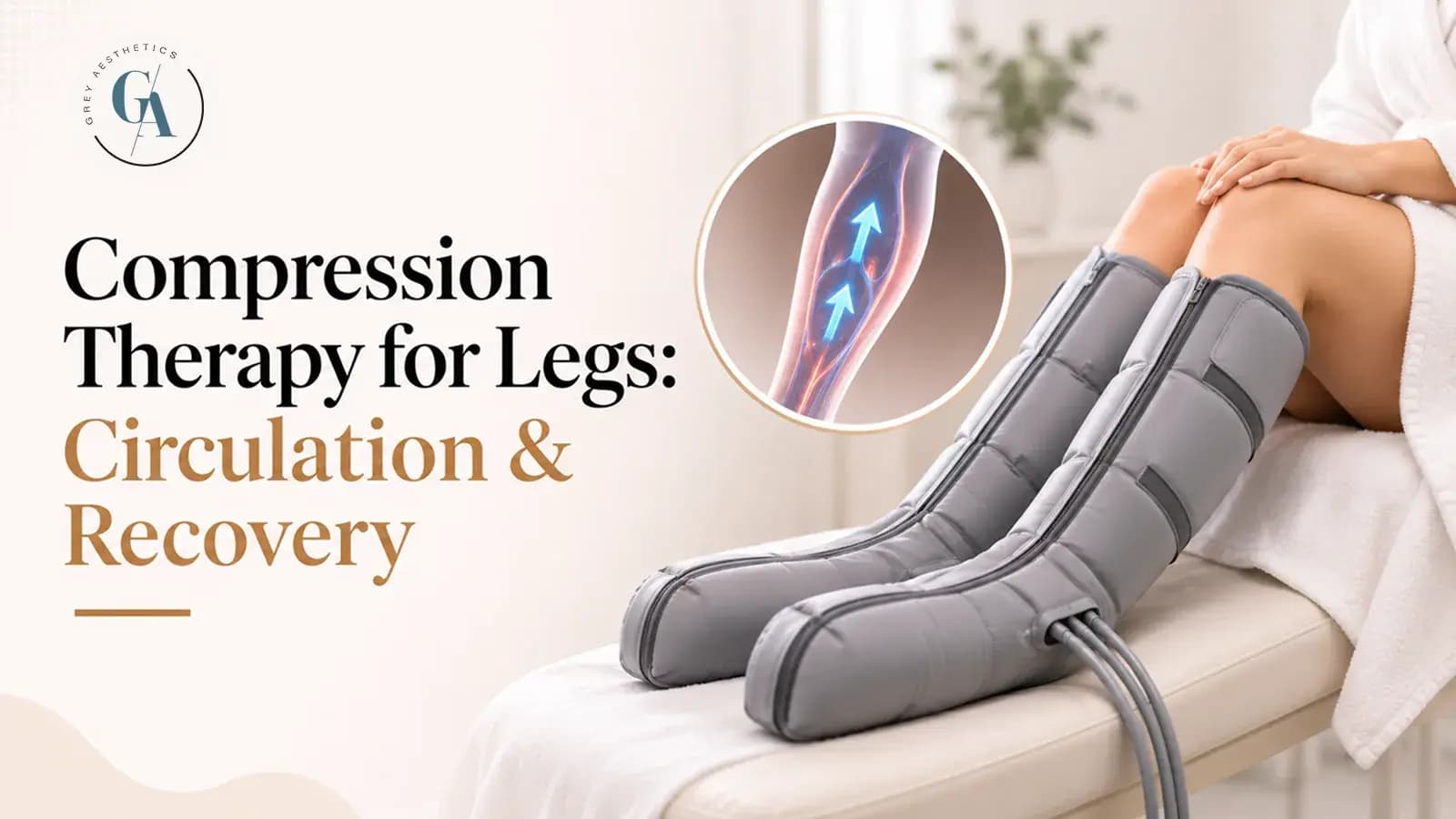
After a long workout, a full day on your feet, or hours spent traveling, your legs can feel heavy, tired, or uncomfortable. Compression therapy for legs offers a passive recovery option using controlled air pressure that repeatedly squeezes and releases the lower body.
At our Newport Beach clinic, we offer pneumatic hip and leg compression therapy to support recovery, relaxation, and overall wellness.
Whether you’re considering compression therapy after a workout, long hours of sitting, or a demanding day on your feet, understanding its potential benefits and limitations can help you decide whether it’s right for you.
Quick Answer
Leg compression therapy uses inflatable garments that apply rhythmic, sequential pressure to the legs. This mechanical compression can temporarily assist blood and fluid movement and may reduce feelings of heaviness or post-exercise soreness.
Pneumatic compression is used in medical and wellness settings, but its benefits depend on the reason for treatment. Research suggests some people experience less muscle soreness, while evidence for improved athletic performance or faster physical recovery remains mixed.
At Grey Aesthetics, our pneumatic hip and leg compression sessions typically last 30 to 60 minutes.
What Is Leg Compression Therapy?
Leg compression therapy involves applying controlled pressure to the lower limbs. Compression can be delivered through stockings, wraps, or inflatable devices.
Pneumatic compression therapy is different from ordinary compression socks. A machine pumps air into chambers inside a garment, creating alternating pressure and release. Some systems cover the lower legs, while others extend above the knees and around the hips.
Our hip and leg compression treatment uses sequential pneumatic pressure that moves from the feet through the calves, thighs, and hips, creating a repeated compression-and-release cycle.
How Does Pneumatic Compression Therapy Work?
A typical pneumatic compression cycle involves several steps:
- Air enters a chamber near the lower leg.
- Additional chambers inflate in sequence farther up the leg.
- The system applies controlled pressure for a short period.
- Chambers release and the cycle repeats.
This repeated pressure can help move venous blood toward the heart and assist fluid movement within the lower body. The Cleveland Clinic’s compression therapy guide explains that external compression can support circulation and reduce certain forms of fluid accumulation.
However, the temporary mechanical effects of a compression session should not be confused with a guaranteed lasting improvement in circulation or cardiovascular health.
What Are the Benefits of Compression Therapy for Legs?
The potential benefits depend on the user’s health, activity level, and reasons for seeking compression.
1. Supports Lower-Body Circulation
Sequential pressure can assist blood movement through the legs while the system is operating. This may be helpful for people seeking a passive compression experience after extended periods of sitting or standing. It does not mean that every circulation problem can be treated with a wellness session.
2. May Ease Feelings of Leg Heaviness
Some people seek compression therapy because their legs feel heavy or tired at the end of the day. The alternating pressure can create a massage-like sensation that may improve comfort during or shortly after treatment.
3. May Reduce Perceived Muscle Soreness
Pneumatic compression is popular among runners, cyclists, and people who regularly exercise their lower body. Some studies suggest it can reduce perceived soreness after exercise, although improvements are generally modest.
4. Supports Fluid Movement
External compression can assist fluid movement in the legs. However, swelling can have many causes, and a professional evaluation is important when symptoms are persistent, unexplained, or medically concerning.
5. Provides a Passive Recovery Experience
Unlike stretching or active recovery, pneumatic compression requires little physical effort. You can remain comfortably reclined while the system performs repeated compression cycles. For some people, this makes it an appealing addition to a broader recovery routine.
Does Compression Therapy Improve Circulation?
Pneumatic compression can support blood movement in the legs during treatment. The repeated pressure helps push venous blood upward and can reduce temporary pooling. This effect is well understood in clinical compression systems.
However, a spa recovery session is not the same as medically prescribed compression for conditions such as chronic venous insufficiency, lymphedema, or blood-clot prevention. The appropriate pressure, duration, and treatment method depend on the person’s health condition.
For general wellness use, the realistic goal is temporary compression support and comfort, not permanent correction of a circulatory problem.
Compression Therapy for Athletes and Post-Workout Recovery
Compression therapy for athletes has become a popular recovery option among runners, cyclists, weightlifters, and other active adults. Many use pneumatic compression boots after demanding workouts to help reduce feelings of muscle soreness and fatigue.
The main question is whether the treatment improves actual muscle recovery or simply makes people feel less sore. A 2024 systematic review and meta-analysis examined 17 studies involving 319 participants. It found trivial to small benefits for muscular function and trivial to moderate effects on pain and soreness, with considerable variation across measurements.
When Should Athletes Use Compression Therapy?
Some active people prefer compression following a demanding workout, while others schedule it on a recovery day. There is no universally established wellness protocol that guarantees the best results.
Someone may consider it after running, cycling, hiking, or lower-body strength training, provided there are no medical reasons to avoid compression. The basics of recovery still matter more: adequate sleep, nutrition, hydration, appropriate training loads, and rest.
Can Compression Therapy Help Swollen or Tired Legs?
Compression can assist fluid movement and may reduce feelings of heaviness associated with prolonged standing or sitting. However, the reason for swelling matters.
Temporary puffiness following activity is different from swelling caused by heart disease, venous problems, infection, injury, or a blood clot.
Seek medical evaluation for swelling that is new, persistent, unexplained, painful, or mainly affects one leg. Redness or warmth can also be a warning sign. Sudden shortness of breath, chest pain, or other symptoms suggesting a serious clot-related emergency require immediate medical attention.
A wellness compression session should never be used to investigate or replace treatment for these conditions.
Is Compression Therapy the Same as Lymphatic Drainage?
No. Pneumatic compression and manual lymphatic drainage use different methods. Pneumatic compression applies mechanical pressure through inflatable garments. Manual lymphatic drainage involves specialized, gentle hands-on techniques.
Both may be used in certain fluid-management approaches, but they are not interchangeable. People with diagnosed lymphedema require a clinician-directed plan. The protocols used in medical lymphedema care should not be assumed to apply to ordinary med-spa recovery sessions.
What Results Can You Expect After One Session?
A person may notice that their legs feel more comfortable, relaxed, or less heavy shortly after treatment. Some people may experience little noticeable change.
The immediate sensation of relief is different from measurable long-term improvements in circulation or athletic recovery. Neither lasting swelling reduction nor faster muscle repair is guaranteed after a single session.
After your first session, pay attention to how your legs feel and whether the experience meets your recovery or relaxation goals. Your response can help guide future sessions.
What Happens During a Leg Compression Therapy Session?
During your compression therapy session, you’ll relax while inflatable garments apply controlled, rhythmic pressure to your legs and hips.
Step 1: Consultation and Screening
Our team will review your recovery goals and relevant medical history to determine whether pneumatic compression is appropriate for you.
Step 2: Garment Placement
Inflatable garments are fitted around the legs and may extend to the hips.
Step 3: Sequential Compression
The system begins a programmed cycle of inflation and release, creating rhythmic pressure along the lower body.
Step 4: Rest During Treatment
You sit or recline comfortably while the machine operates.
Step 5: Finish the Session
Once the session ends, the garments are removed. Appropriate candidates generally do not need downtime and can return to ordinary activities.
What Does Leg Compression Therapy Feel Like?
Most people describe pneumatic compression as firm, rhythmic squeezing around the legs. The pressure comes and goes in cycles, creating a sensation somewhat similar to a leg massage.
Although many people find the experience relaxing, it should not be painful. Tell the provider immediately if you experience significant discomfort, numbness, tingling, or unusual pain. Pressure settings and suitability should be assessed rather than simply continuing through symptoms.
How Often Should You Do Compression Therapy?
For general wellness and relaxation, we typically recommend one or two compression therapy sessions per week. However, the ideal frequency depends on your activity level, recovery goals, and medical history.
Athletic recovery plans may differ, but research has not established one universal session frequency that produces optimal recovery for everyone. Compression prescribed for lymphedema, vascular disease, or postoperative care should follow medical instructions rather than a general med-spa schedule.
How Much Does Leg Compression Therapy Cost?
Compression therapy cost can vary depending on session length and the treatment options available.
For current pricing and appointments at our Newport Beach clinic, contact our team. We’ll explain the session details and help you understand what to expect before booking.
Compression Therapy vs Compression Socks
Both options apply external pressure, but they work differently.
| Feature | Compression Socks | Pneumatic Compression |
|---|---|---|
| Pressure | Sustained pressure | Repeated inflation and release |
| Application | Worn directly on the legs | Inflatable garments connected to a machine |
| Duration | Often worn for extended periods | Used during a timed session |
| Common purpose | Ongoing compression support | Medical applications or recovery sessions |
| Experience | Continuous snug fit | Rhythmic squeezing |
Neither option is universally better. Medical compression stockings and pneumatic devices have different uses, and appropriate treatment depends on the patient’s needs.
Compression Therapy vs Massage: Which Is Better?
Compression therapy provides automated pressure across a relatively broad area of the legs. Massage uses hands-on techniques that can be adjusted to individual muscles and areas of tension.
Pneumatic compression may appeal to people who prefer a passive full-leg experience. Manual massage may be more suitable for someone seeking targeted work in a specific area. There is not enough evidence to say that one approach is universally superior for recovery.
Who May Benefit From Leg Compression Therapy?
Pneumatic compression may appeal to adults who:
- Feel leg fatigue after long periods of standing
- Spend many hours sitting
- Exercise regularly
- Run, cycle, hike, or lift weights
- Want a passive post-workout recovery option
- Prefer a relaxing wellness session
- Are exploring provider-approved recovery options after certain aesthetic procedures
Suitability depends on more than lifestyle. Medical history and current symptoms should always be considered.
Who Should Avoid Compression Therapy or Seek Medical Advice?
Pneumatic compression is not appropriate for everyone. Medical assessment is especially important for people with known or suspected deep vein thrombosis, severe peripheral arterial disease, active skin infections, significant heart-related swelling, open wounds, or unexplained leg symptoms.
Pregnancy, recent surgery, a history of blood clots, or other complex medical conditions may also require individualized advice.
Compression devices are used clinically for some of these conditions under professional supervision. That does not make an unsupervised or general wellness session appropriate for someone with the same diagnosis.
Stop treatment and tell the provider if compression causes pain, numbness, skin irritation, or unusual symptoms.
Can Compression Therapy Be Used After Body Sculpting?
Pneumatic compression may complement certain body-sculpting treatments when appropriate. Depending on the procedure, it may be considered to support comfort and fluid movement during recovery. Our guide to body sculpting in Newport Beach explains where compression fits alongside RF tightening, muscle toning and cellulite treatments.
Our team will determine whether compression fits your treatment plan. After surgery or other procedures, compression should only be used with the treating provider’s approval.
Leg Compression Therapy in Newport Beach and Orange County
We offer pneumatic hip and leg compression therapy at our Newport Beach clinic for people interested in circulation support, post-workout recovery, and general wellness.
Our Newport Beach clinic welcomes clients from surrounding Orange County communities, including Corona Del Mar, Costa Mesa, Irvine, Laguna Beach, and Huntington Beach.
If you are searching for leg compression therapy near me, consider whether the provider explains the system being used, screens for contraindications, and sets appropriate expectations.
A well-managed session should focus on comfort and individual suitability rather than promising dramatic health or performance changes.
Conclusion
Compression therapy for legs provides a passive way to apply controlled, rhythmic pressure to the lower body. It may support temporary blood and fluid movement, improve comfort, and reduce perceived muscle soreness for some people.
Although the treatment is popular for recovery, research does not establish that it consistently improves athletic performance or dramatically speeds muscle repair. For appropriate candidates, pneumatic compression can be a useful addition to a wellness routine alongside rest, movement, and other proven recovery practices.
Interested in leg compression therapy in Newport Beach? Schedule a complimentary 15-minute consultation with our team to discuss your recovery goals, session options, and whether pneumatic compression is suitable for you.
FAQs
What is leg compression therapy?
What are the benefits of compression therapy for legs?
Does compression therapy improve blood circulation?
Can compression therapy reduce leg swelling?
Is compression therapy good after a workout?
Is leg compression therapy safe?
Where can I get leg compression therapy in Newport Beach?
Keep Reading
Related Articles
Body Sculpting in Newport Beach at Grey Aesthetics: Before & After Results
How RF tightening, EMS toning, cellulite reduction and compression work together.

TriLift in Newport Beach: Benefits, Safety, and What to Expect
How TriLift combines RF, muscle stimulation and lymphatic support.

Best IV Therapy in Newport Beach: Benefits & Before After
Hydration, recovery and energy drips, and who each one suits.
Start Here
Ready to give your legs a break?
Book a complimentary 15-minute consultation and the Grey Aesthetics team will check whether pneumatic hip and leg compression suits your goals.