
Regenerative Medicine · Newport Beach
PRP Injections in Newport Beach, CA
PRP injections use the platelets already in your blood, concentrated and reintroduced, to stimulate collagen, and support tissue repair. No synthetic material. No foreign substance. Just your own biology, put to work where you need it.
5–10×
Platelet concentration vs. baseline blood
1–3 days
Typical downtime
2–3
Sessions for visible results
What Is PRP
A treatment built from your own blood, not a lab-made substitute
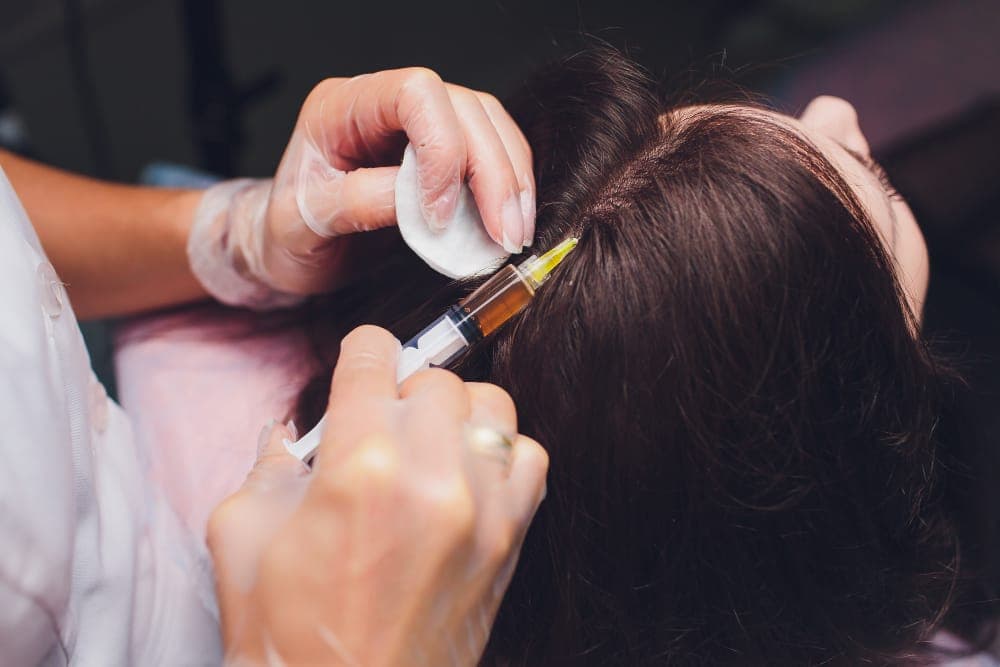
PRP, or platelet-rich plasma, is a regenerative treatment made from a patient's own blood. A small sample is drawn, then spun in a centrifuge to separate and concentrate the platelets, growth factors, and healing proteins already present in your blood. That concentrated layer is injected into the skin or scalp to stimulate collagen production, accelerate repair, and improve tone and texture over time.
Platelets do more than help blood clot. They release growth factors, including PDGF, TGF-β, VEGF, and EGF, that signal surrounding cells to repair tissue and build new collagen. PRP simply delivers a much higher concentration of these signals directly to the area that needs them.
Because PRP is derived entirely from your own body, there is no synthetic material involved and the risk of allergic reaction is minimal. It is used for facial skin rejuvenation, PRP facial treatment protocols like the vampire facial, and hair restoration for early thinning.
The Process
What to expect from PRP treatment
PRP is an in-office treatment, with blood collection and processing performed as part of the treatment session.
- 1
Blood draw
A small blood sample is taken from your arm, similar to a routine lab draw. This typically takes only a few minutes.
- 2
Centrifuge separation
Your sample is spun at a controlled speed, separating it into plasma, platelets, and red blood cells so the platelet-rich layer can be isolated.
- 3
Numbing
A topical numbing cream is applied to the treatment area to keep the procedure comfortable.
- 4
Application
Depending on your goals, the concentrated PRP is either injected into targeted areas or worked into the skin through microneedling for a PRP facial treatment.
- 5
Aftercare
Most patients see mild redness or swelling for one to three days and return to normal activity the same day. Results build gradually as collagen production increases.
PRP Skin Treatment
What PRP skin rejuvenation improves
As a PRP skin treatment, plasma injections address concerns tied to lost collagen, uneven texture, and slowed cell turnover.
Fine lines & texture
Stimulated collagen and elastin smooth fine lines and improve overall skin texture over a series of sessions.
Acne scars
PRP supports tissue remodeling, softening the appearance of atrophic acne scars, especially when paired with microneedling.
Tone & dullness
Improved cell turnover and circulation contribute to a more even, radiant complexion.
Under-eye hollows
PRP may improve the appearance of under-eye hollowness and skin quality without using synthetic filler.
Skin elasticity
Ongoing collagen stimulation helps skin regain firmness lost to age or sun exposure.
Hair thinning
Applied to the scalp, PRP supports follicle activity and is often combined with Kerafactor for hair restoration.
PRP Facial Treatment
The vampire facial: PRP delivered through microneedling
A PRP facial treatment pairs plasma with microneedling instead of targeted injections. Fine needles create controlled micro-channels across the skin, and PRP is applied during or immediately after so growth factors reach deeper layers over the entire treatment area rather than isolated points.
- Works across the full face for broader coverage than spot injections
- Commonly combined with the same PRP session used for targeted areas
- Popular for overall glow, texture, and tone rather than a single concern
- Minimal downtime, with most redness settling within a day or two
Also Known As
The “Vampire Facial”
The nickname comes from the visible plasma applied to the skin during the procedure, not from anything unusual about the treatment itself. It is the same PRP used in standard injections, delivered through microneedling for broader, more even coverage.
Ask your provider whether a PRP facial treatment or targeted PRP injections better suit your goals. Many patients combine both in a single visit.
Comparing Your Options
PRP vs. PRFM vs. HA filler
Understanding how these three approaches differ helps clarify which fits your goals.
| Attribute | PRP | PRFM | HA filler |
|---|---|---|---|
| Source | Your own blood | Your own blood | Synthetic hyaluronic acid |
| Form | Liquid serum | Fibrin matrix | Gel |
| Mechanism | Stimulates your own collagen | Sustained release of growth factors | Adds immediate physical volume |
| Onset | Gradual, over weeks | Gradual, longer sustained release | Immediate |
| Best for | Texture, tone, mild volume support | Areas needing prolonged stimulation | Defined volume loss |
Candidacy
Who is a good candidate for PRP
- Fine lines, wrinkles, or early signs of facial aging
- Acne scars, hyperpigmentation, or uneven texture
- Hair thinning or early-stage hair loss
- A preference for natural, non-synthetic rejuvenation
- Interest in extending results from microneedling or RF treatments
- General good health with no active infection at the treatment site
Getting Started
What to know before your first PRP session
How to prepare
Follow the pre-treatment instructions provided by your Grey Aesthetics provider. These may include guidance about medications, supplements, alcohol, hydration, and eating before treatment.
Who should check with a doctor first
Tell your provider about any medical conditions, medications, pregnancy, or active skin conditions before treatment so they can determine whether PRP is appropriate for you.
Why Grey Aesthetics
Physician-overseen PRP in Newport Beach
For PRP injections Newport Beach patients trust with their own blood, Grey Aesthetics keeps every step, from draw to injection, under direct clinical oversight.
- Physician-overseen care: PRP protocols at Grey Aesthetics are provided with physician oversight and tailored to your treatment goals.
- PRP and PRFM, both available: Your provider selects standard PRP or the more advanced PRFM formulation based on your treatment goals, not a one-size protocol.
- Combination protocols: PRP is frequently layered with microneedling, RF microneedling, or exosome therapy for a more complete regenerative outcome.
- A refined, clinical setting: Blood processing and injections take place in a controlled, medically supervised environment.
Patient Experiences
What our patients are saying
“Great medspa, very tailored to individual need, and leans toward natural treatments that work deep and stimulate our own collagen and healing response.”
— Alicia Jerome
“Beautiful and professional spa with pleasant staff that are also extremely educated and a gift to their profession. I see results in first treatment.”
— Lisa Fallon
“They were very personable and patient with my questions and curiosity. I was very comfortable. The end results were amazing.”
— Katherine Simmons
Frequently Asked Questions
What is PRP and how is it collected?
PRP, or platelet-rich plasma, is made from a small sample of your own blood. The blood is drawn and spun in a centrifuge to separate and concentrate the platelets and growth factors. This concentrated layer is then injected into the treatment area. Because PRP comes from your own biology, the risk of allergic reaction is minimal.
What is the difference between PRP treatment and PRP facial treatment?
PRP treatment is the general term for injecting concentrated platelets into the skin or scalp. A PRP facial treatment, often called a vampire facial, combines PRP with microneedling so the plasma is worked into the skin across the full face rather than delivered only through targeted injection points. Both use the same PRP, applied differently depending on the goal.
What skin concerns can PRP skin treatment address?
PRP skin treatment is used for fine lines and wrinkles, dull or uneven tone, acne scarring, under-eye hollows, loss of elasticity, and early hair thinning. It can also be layered with microneedling or RF treatments to extend results.
How many PRP sessions will I need?
Most patients notice visible improvement after two to three sessions spaced four to six weeks apart. Results continue to build over several months as collagen production increases, and a maintenance session once or twice a year is typically enough to sustain them.
Is PRP skin rejuvenation permanent?
No treatment that stimulates your own collagen is permanent, since skin continues to age naturally. Results from PRP skin rejuvenation typically last several months to over a year depending on the area treated and your skin's baseline condition, and most patients maintain results with periodic sessions.
Is PRP painful and what is the downtime?
PRP injections are generally well tolerated. A topical numbing cream is applied beforehand to reduce discomfort. Afterward, patients may notice mild redness, swelling, or bruising at the injection sites that typically resolves within one to three days, and most people return to normal activities the same day.
What is the difference between PRP and PRFM?
PRFM, or platelet-rich fibrin matrix, is an advanced form of PRP. Standard PRP is a liquid serum, while PRFM uses a fibrin matrix that holds platelets in place longer at the treatment site for a more gradual release of growth factors. Grey Aesthetics offers both, and your provider will recommend the option suited to your goals.
Can PRP be combined with other treatments?
Yes. PRP is often combined with microneedling for a PRP facial treatment, with RF microneedling, with exosome therapy, or with Kerafactor for hair restoration. Combining PRP with other modalities can extend and strengthen results.
Restore your skin with the power of your own biology
Schedule a PRP consultation at Grey Aesthetics in Newport Beach.