PRF Under Eyes: Results, Recovery & How Long It Lasts
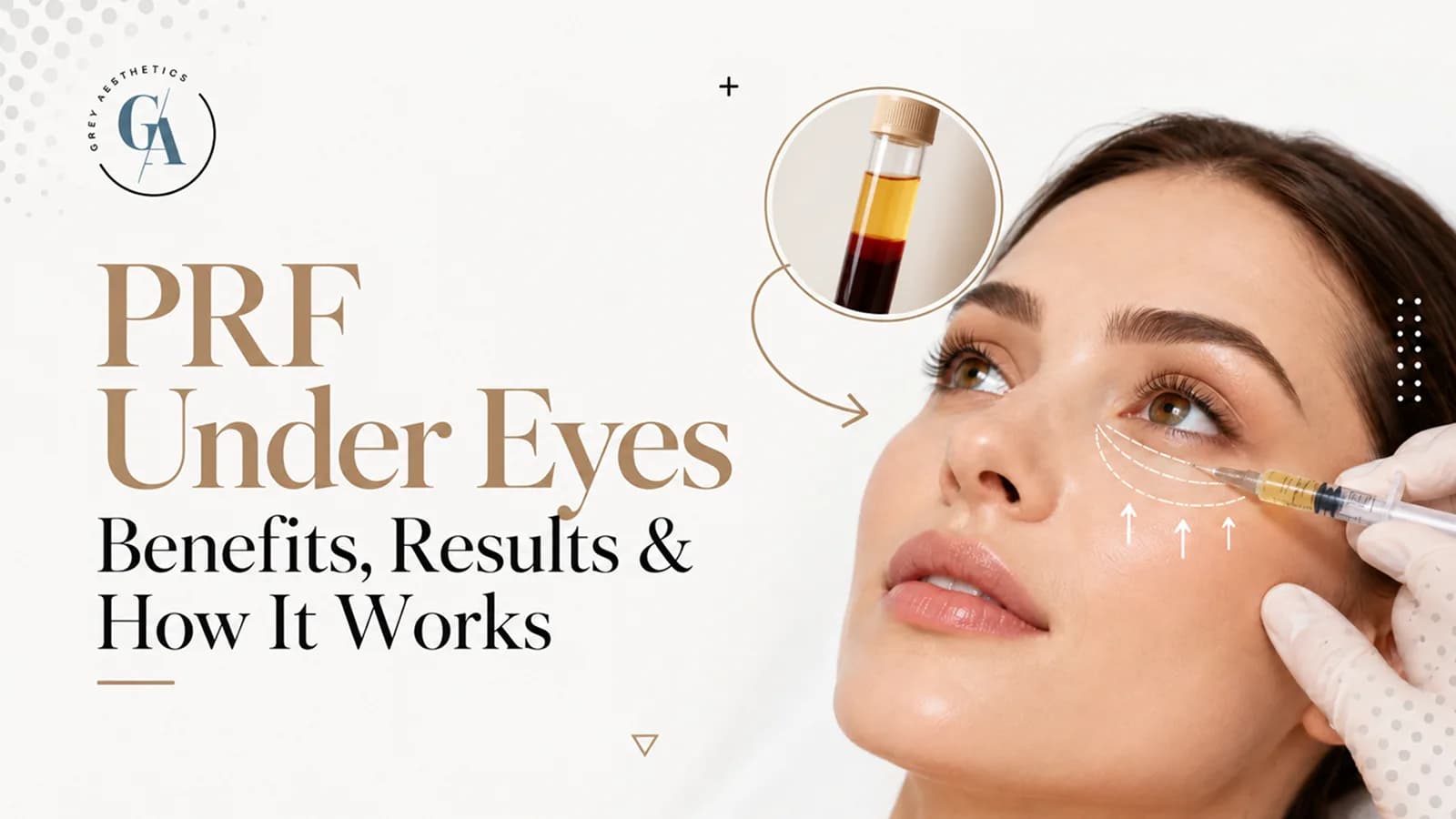
PRF under the eyes is an autologous treatment that uses your own spun blood and is associated with improvements in skin texture, wrinkles and crepiness. Grey Aesthetics offers PRP and PRFM within its regenerative medicine program. This article explains how PRF works, what results to expect, and how long they last.
What is PRF and how does it work under the eyes?
Platelet-Rich Fibrin, or PRF, is a second-generation, completely autologous platelet concentrate, prepared without anticoagulants, that releases growth factors over a prolonged period, as a review in the National Library of Medicine’s PMC archive describes it.
PRF under eyes treatment
A small blood draw goes into a tube and is spun once, slowly. The same review lists a typical protocol of 2,700 to 3,000 rpm for 10 to 12 minutes, and the transfer to the centrifuge has to happen within 2 minutes and 30 seconds or the PRF may not be clinically usable.
The slow spin preserves a three-dimensional fibrin matrix that traps platelets and white blood cells, according to a 2025 systematic review of periorbital PRP and PRF. PRF undergoes a shorter, slower, single-spin centrifugation process that creates this three-dimensional fibrin matrix.
The same review reports growth-factor release for up to 2 weeks.
Regenerative medicine
PRF and exosomes are placed under the eyes to stimulate new collagen and elastin production and improve skin thickness and elasticity. Fillers primarily address volume loss and structural concerns, but don’t significantly improve skin quality, texture, or true pigmentation issues. Practices such as Grey Aesthetics offer PRP & PRFM as part of a broader regenerative medicine program.
What specific results can you expect from under-eye PRF treatment?
In the 14-study review, PRF was associated with improvements in skin texture, wrinkles and crepiness, while PRP showed stronger evidence for hyperpigmentation (PMC, 2025). Both carried only mild, transient adverse effects and high patient satisfaction. For a side-by-side look at the two, see our guide to PRF vs PRP.
What PRF targets, and what it does not
Clinics describe the treatment zone as dark circles, fine lines, crepey or fragile skin, mild hollowness and a tired look.
PRF and exosomes stimulate new collagen and elastin production, enhance circulation and tissue oxygenation, and improve overall skin tone and texture.
Fillers primarily address volume loss and structural concerns such as hollow tear troughs; PRF is suited to thin, crepey skin with mild to moderate volume loss rather than severe hollowing.
A note on dark circles
Dark circles have several causes. They are often thin skin letting blood vessels show through, and PRF stimulates collagen and elastin so the skin becomes denser. Pigment-driven darkness is another story, and there the evidence leans toward PRP.
How long do under-eye PRF results last and what does the timeline look like?
The 2025 review found that PRF improvements often diminished by 6 months, that the longevity of results remains unclear, and that the evidence does not establish superiority of either treatment.
A realistic timeline
Clinic timelines vary, and they are provider accounts rather than controlled data.
One clinic describes:
- Cellular regeneration beginning in weeks 1 to 4
- Noticeable improvement in weeks 4 to 8
- Peak results in months 3 to 6, with a series of 2 to 4 sessions spaced 4 to 6 weeks apart
Another notes that in weeks 2 to 3 the initial swelling goes down but the new collagen hasn’t grown yet, so you might feel the treatment “didn’t work.”
| Phase | What typically happens |
|---|---|
| Days 1 to 3 | Swelling and temporary plumping from the gel itself |
| Weeks 2 to 3 | Swelling subsides; little visible change yet |
| Weeks 1 to 4 | Cellular regeneration begins |
| Weeks 4 to 8 | Noticeable improvement |
| Months 3 to 6 | Peak effect after the full series |
| Around 6 months | PRF improvements often diminished by this point |
What should you know before choosing PRF over other under-eye treatments?
Choose PRF when skin quality is the problem and filler when volume is. Filler adds immediate structure; PRF regenerates tissue gradually. If hollowing is your main concern, our guide to under-eye filler covers that side of the decision.
| Treatment | Best for | Speed | Trade-off |
|---|---|---|---|
| PRF | Texture, fine lines, crepiness, thin skin | Gradual, months | Improvements often diminished by 6 months |
| PRP | Pigmentation | Gradual; typically weeks to months | Growth factors released in a quick burst, without a fibrin matrix |
| Hyaluronic acid filler | Tear trough hollows | Immediate | Adds volume, not skin quality |
Safety and the personalized plan
PRF is made from your own blood, with no synthetic substances. The 2025 PMC review reported mild, transient adverse effects. Expect swelling, mild bruising and tenderness. A blunt cannula is one way some clinics reduce bruising here. Protocols ought to be matched to your anatomy instead of pulled from a menu, which is how Grey Aesthetics says it builds regenerative plans.
Pairing with exosomes and other options
If you want subtle enhancement without synthetic volume, this lane tends to appeal. Grey Aesthetics also offers LaseMD Ultra for tone, texture and clarity, and TriLift, a non-surgical facelift combining Dynamic Muscle Stimulation and radiofrequency.
Who should be cautious?
Clinics advise caution for:
- Patients with active infections
- Patients with certain blood disorders
- Heavy smokers
They also advise avoiding NSAIDs such as ibuprofen after treatment. Confirm the specifics with your physician.
Final Thoughts
PRF under the eyes may help improve fine lines, crepey skin and skin texture through gradual tissue changes. Unlike hyaluronic acid fillers, which primarily address hollowness and volume loss, PRF focuses on supporting skin quality. However, results vary from person to person, and improvements may diminish over time.
Choosing the right treatment depends on the underlying cause of your concerns, whether it is pigmentation, thin skin, fine lines or tear trough hollowness. A personalized assessment can help determine whether PRF, PRP, fillers or another treatment is best suited to your goals.
At Grey Aesthetics in Newport Beach, PRP and PRFM are part of a broader regenerative medicine program designed to address individual skin concerns. By considering your anatomy, treatment goals and realistic expectations, the team can help you explore appropriate options for under-eye rejuvenation.
If you are considering PRF under-eye treatment, consult a qualified provider to understand the potential benefits, limitations, recovery and risks before making your decision.
Frequently Asked Questions
Is PRF under the eyes safe?
Can PRF be combined with exosomes?
How many PRF sessions do you need under the eyes?
What is recovery like?
Will I look better the day after treatment?
What results can I expect in six months?
Does PRF fix deep tear trough hollows?
- PRF is your own blood spun slowly into a fibrin scaffold that releases growth factors for up to two weeks, prompting collagen rebuilding.
- It improves texture, fine lines and crepiness; PRP has the stronger evidence for pigmentation.
- Improvements from PRF often diminish by 6 months, so plan with your provider for what comes next.
- Choose PRF for thin, crepey skin with mild hollowing; choose a volumizer for deep tear troughs.
Keep Reading
Related Articles
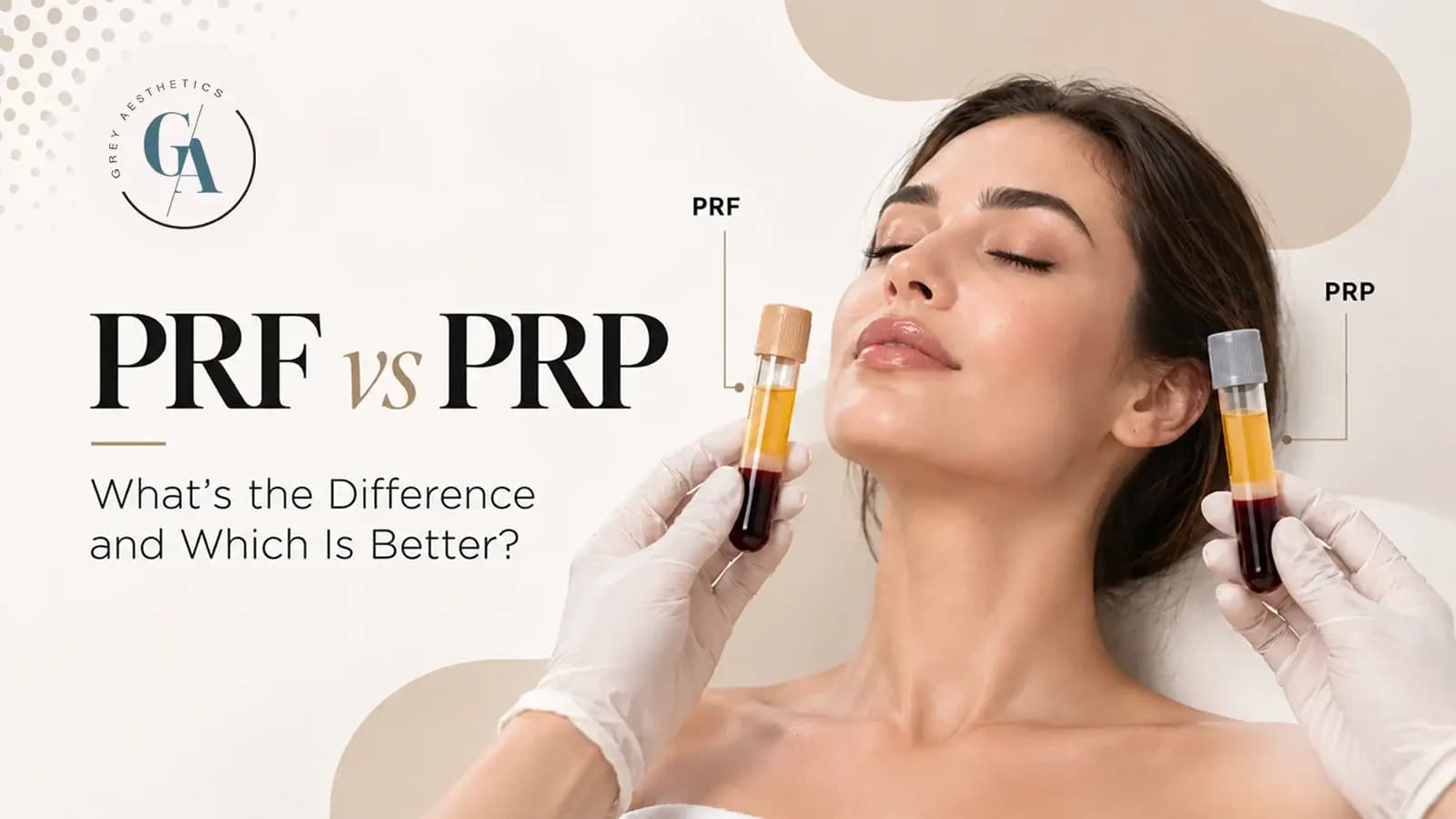
PRF vs PRP: What's the Difference and Which Is Better?
Both use your own blood, but spin speed and fibrin change onset, longevity and sessions.

Under-Eye Filler in Newport Beach, CA: Results & What to Expect
How tear trough filler works, what results to expect, how long it lasts, and key risks.
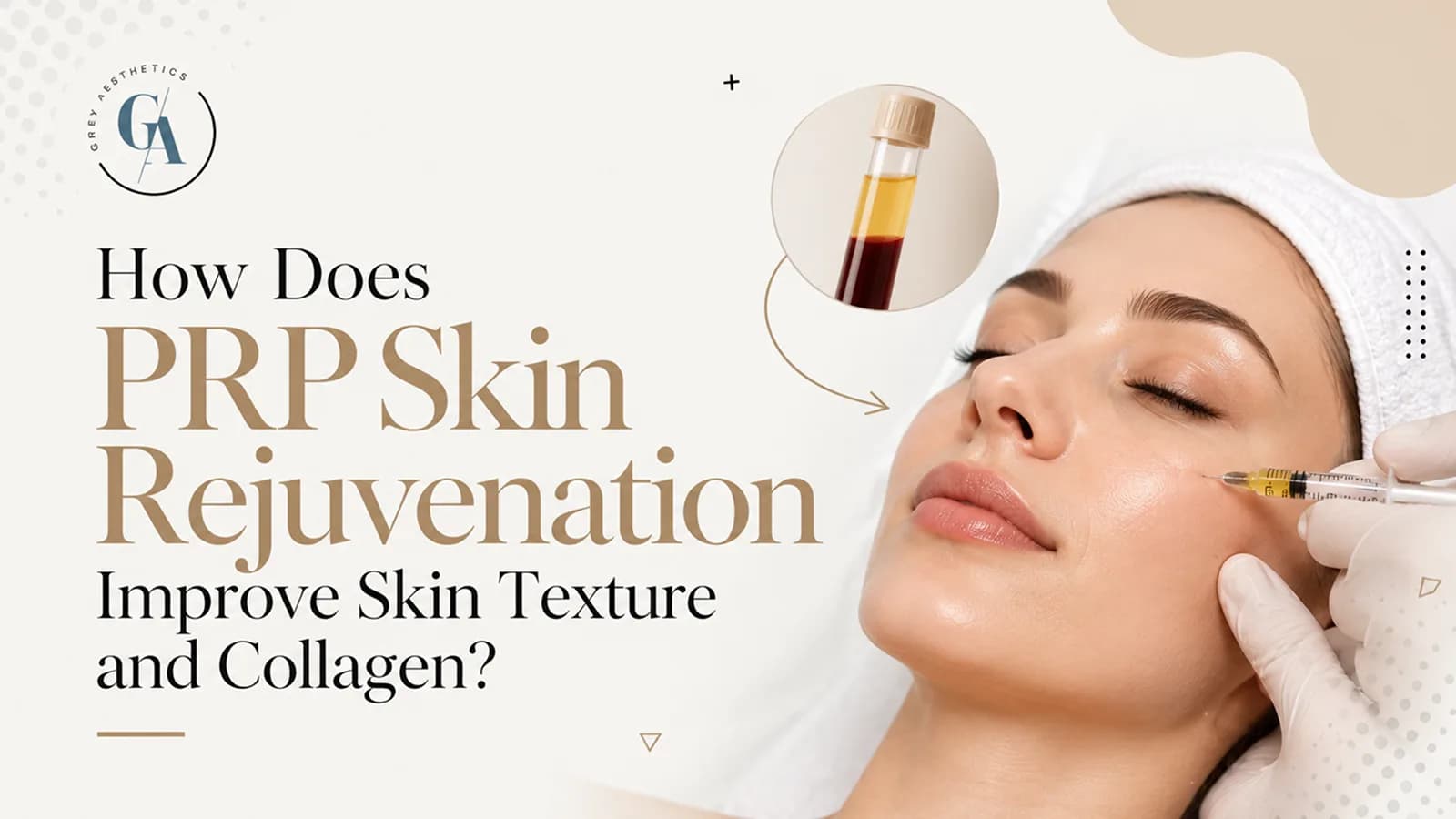
How Does PRP Skin Rejuvenation Improve Skin Texture and Collagen?
How PRP's growth factors prompt new collagen, and what the clinical evidence shows.
Start Here
Considering PRF for your under-eyes?
Book a consultation and the Grey Aesthetics team will assess your skin, explain what PRF can and cannot do, and help you plan realistic next steps.