Does Scalp Treatment Work for Thinning Hair (Men and Women)?
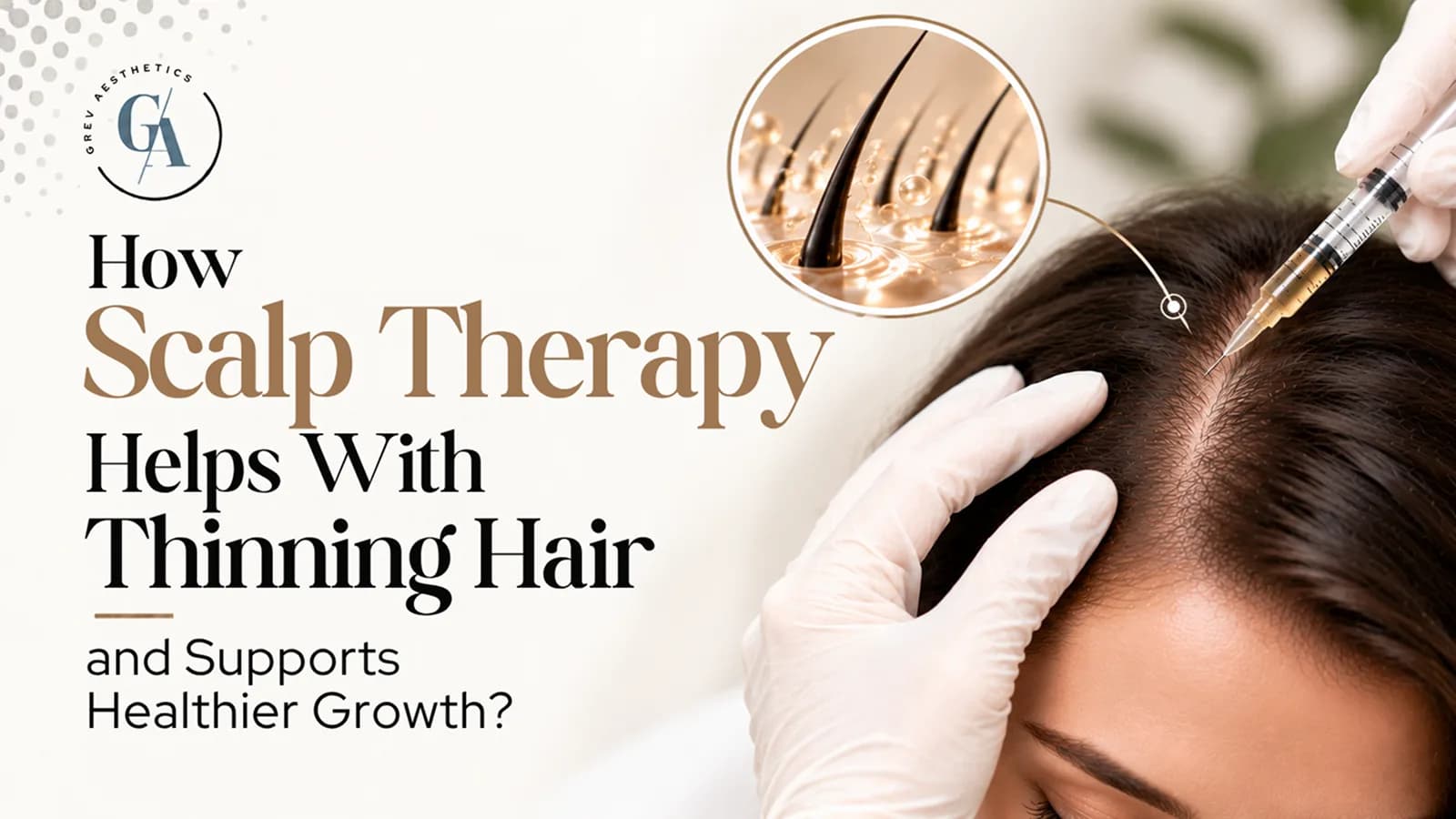
Scalp therapy helps thinning hair by clearing buildup, calming inflammation and delivering growth signals to follicles that have gone dormant rather than died. At Grey Aesthetics, the first step is a scalp analysis, because how scalp therapy helps with thinning hair depends on what is actually suppressing your follicles.
What happens to your scalp when hair starts thinning, and why does treating it matter?
Thinning usually begins in the scalp environment, well before it shows in the strands. Our hair restoration team traces most thinning to poor circulation, follicular inflammation, blocked pores or a shortage of the growth signals that keep follicles active, rather than follicles being gone entirely.
Buildup, inflammation and circulation
Excess sebum, dead skin cells and product residue crowd the follicle opening. Chronic inflammation weakens the follicle further, and reduced blood flow limits the nutrients reaching it.
Miniaturization and dormancy
Kerafactor is designed to reawaken dormant and miniaturized follicles and extend the active growth phase. Advanced loss with few active follicles is a different case and may call for surgical options.
Why topicals alone fall short
It has been noted that minoxidil takes at least six months to slow loss and start regrowth, and the benefits fade if you stop.
How does professional scalp therapy actually work to reactivate hair growth?
The scalp treatment at Grey Aesthetics includes a personalized scalp analysis, medical-grade cleansing and exfoliation, and nourishing and anti-inflammatory serums.
Step 1: Personalized scalp analysis
The provider evaluates dryness, oiliness, inflammation, buildup and circulation before choosing products.
Step 2: Medical-grade cleansing and exfoliation
Professional-grade cleansers and exfoliants remove excess sebum, dead skin cells and product buildup.
Step 3: Targeted serum delivery
Keravive, a needle-free treatment, uses a handpiece to extract follicle impurities and infuse a peptide serum, as our Keravive scalp treatment guide explains. The blend includes growth factors, peptides, Vitamin B5 and Arginine, and a daily take-home spray extends results between visits.
Kerafactor takes a related route. Its growth factor system delivers seven hair-specific growth factors, including KGF, VEGF, bFGF and IGF-1, plus two skin proteins, to reawaken dormant follicles and extend the growth phase. The manufacturer describes it as drug-free and built on biomimetic technology, meaning the factors mimic those a healthy scalp makes itself. Optional microneedling creates micro-channels for deeper delivery.
Scalp Treatment Before and After Results at Grey Aesthetics
These hair restoration results come from the Grey Aesthetics gallery. Each pair shows the same area before and after a treatment series, with less scalp showing through at the hairline, crown and temples. They reflect follicles that were still active when treatment began, which is the group scalp therapy helps most.


What scalp therapy options are available, and which approach fits your hair loss type?
Grey Aesthetics’ non-surgical hair restoration options include Kerafactor, Keravive, a customized Scalp Treatment, and PRP injections. They suit different scalp problems, and many plans layer two or more.
| Option | Mechanism | Best suited to |
|---|---|---|
| Keravive-style 3-step protocol | Cleanses, extracts, infuses peptide serum | Early to moderate thinning with congestion or dryness |
| Kerafactor growth-factor serum | Reactivates dormant follicles via growth factors | Early thinning with active follicles |
| PRP / PRFM injections | Concentrated platelets from your own blood | Early-stage thinning, often paired with Kerafactor |
| Low-level laser therapy | Light stimulates follicle cells | Early to moderate pattern thinning, often alongside other treatments |
Matching the option to the pattern
Choose by scalp and stage, not by trend. A congested, itchy, flaky scalp points to a customized scalp treatment first. Early thinning with follicles still active suits Kerafactor. Advanced loss may need a transplant, with non-surgical care used before or after.
PRP and PRFM
PRP injections concentrate platelets from a small blood draw and place them at the scalp. A meta-analysis of six studies covering 177 patients, summarized in a PubMed Central review, found more hairs per cm² after PRP than in controls. PRFM uses a fibrin matrix that holds platelets in place longer, releasing growth factors gradually.
Low-level laser therapy
Low-level laser therapy (LLLT), also called photobiomodulation, is FDA-cleared for hair loss. It raises blood flow around follicles, increases ATP production, reduces inflammation and upregulates growth factors. True laser devices deliver deeper, more concentrated light than scattered LED caps, which often lack the power for meaningful change.
What results should you realistically expect, and how long does scalp therapy take to work?
Expect a slow build: reduced shedding first, then density and texture over months. Kerafactor guidance says many patients notice less shedding within the first two to three sessions, with visible density and texture gains developing over three to six months of consistent treatment.
Typical timeline
Keravive’s protocol is three in-office sessions about four weeks apart, plus the daily spray. In clinical evaluation of the full series, 75% of patients reported improved hair fullness, and the treatment does not claim to reverse advanced baldness. That’s the honest frame: this therapy optimizes follicles that still function.
What the evidence shows
Clinical numbers vary by modality. A review of exosome therapy for alopecia reported density increases of 9.5 to 35 hairs/cm², though it cautions that safety and efficacy remain undetermined and that study designs differ too much for direct comparison. Read such ranges as directional signals rather than a forecast for your own scalp. See Keravive in Newport Beach for how the in-office protocol is structured.
Why results differ
Hair restoration outcomes depend on several factors, including the cause and duration of hair loss, the number of functioning follicles, overall scalp health and consistency with the recommended treatment plan.
Kerafactor treatment guidance typically recommends an initial series of four to six sessions, spaced two to four weeks apart, followed by maintenance treatments every three to six months. The appropriate schedule may vary depending on your needs and the provider’s assessment.
The most important step is to identify the underlying cause of thinning hair before selecting a treatment. A professional assessment can help determine whether scalp therapy, another hair restoration approach or a medical evaluation is most appropriate. While scalp treatments may support hair and scalp health, no single treatment guarantees regrowth for every patient.
Final Thoughts
Scalp therapy can be a valuable part of a hair care and restoration plan, particularly for people looking to improve scalp cleanliness, manage buildup and explore non-surgical options for thinning hair. However, the right approach depends on the underlying cause of hair loss, the condition of the scalp and the number of functioning hair follicles. Treatments such as Keravive, Kerafactor and PRP offer different approaches, and their potential benefits and limitations should be considered before beginning treatment.
At Grey Aesthetics in Newport Beach, personalized scalp treatments and hair restoration options help patients explore approaches suited to their individual concerns. A professional assessment can help determine whether scalp therapy alone or a broader hair restoration plan may be appropriate.
Hair restoration takes time, and results vary from person to person. By understanding the available options, setting realistic expectations and seeking professional guidance, you can make a more informed decision about supporting your scalp health and hair restoration goals.
- Most thinning traces back to the scalp environment rather than follicles being gone entirely.
- Good therapy follows a sequence: analyze, cleanse and exfoliate, then deliver growth-supporting serums.
- Match the option to your pattern: scalp treatment for congestion, Kerafactor for early thinning, PRP for blood-derived support.
- Plan on months, not weeks, and on maintenance, since results depend on stage and consistency.
- If the loss is sudden or patchy, see a physician first; for background on the in-office approach, read about the scalp treatment.
Ready to explore your options? Visit Grey Aesthetics’ Keravive treatment page to learn more about the treatment, or schedule a consultation to discuss whether it may be suitable for your needs.
Frequently Asked Questions
Does scalp treatment work for both men and women?
Can scalp therapy reverse permanent hair loss?
Is scalp therapy safe for all hair types?
Do I need to combine it with minoxidil or finasteride?
How often do I need maintenance treatments?
Can I do scalp therapy at home?
Will a session hurt or keep me out of work?
If my scalp is just oily and itchy, is thinning treatment overkill?
Keep Reading
Related Articles
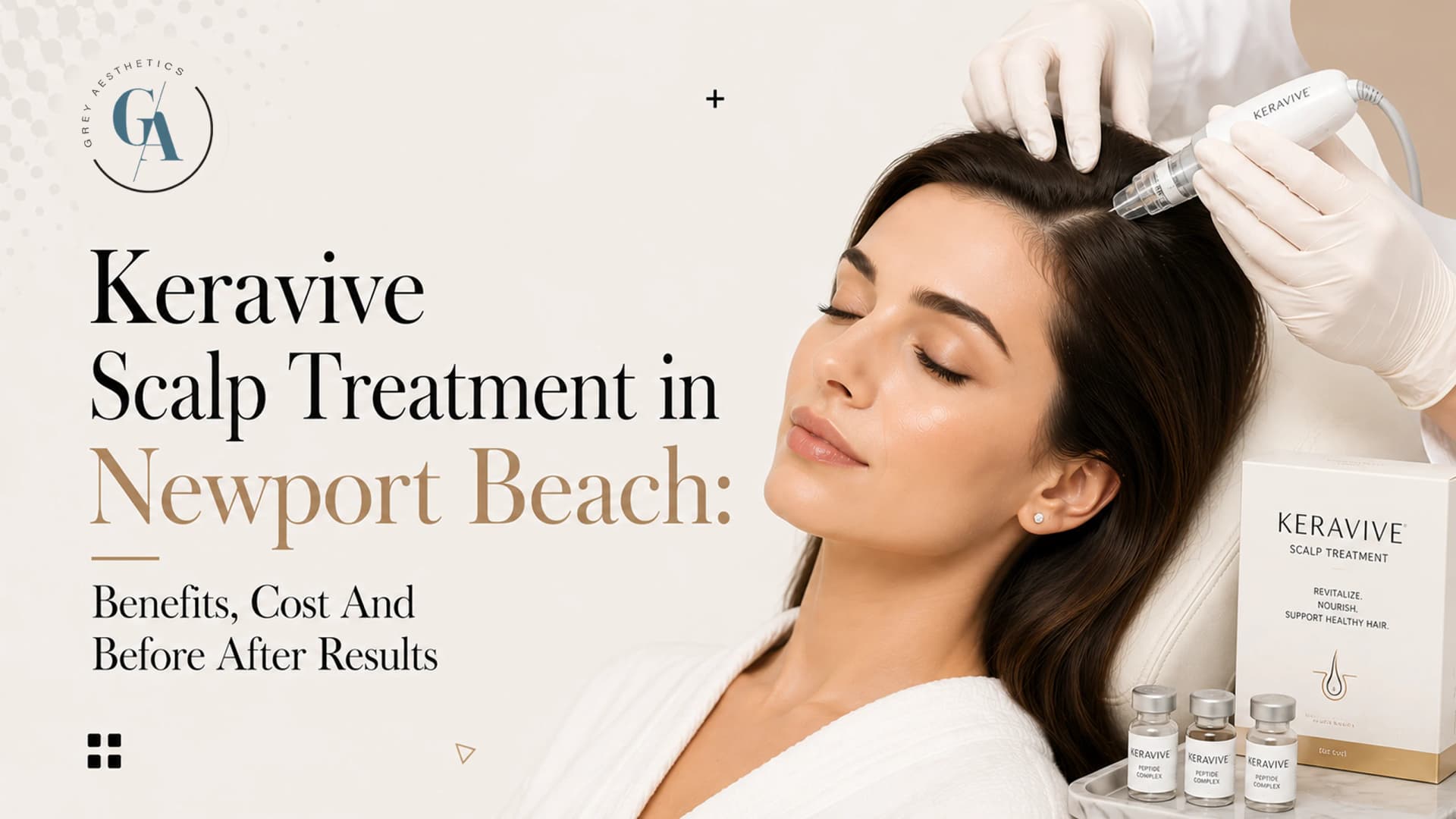
Keravive Scalp Treatment in Newport Beach: Benefits And Before After Results
How the three-step Keravive protocol cleanses, exfoliates and nourishes the scalp.

Keralase Hair Treatment in Newport Beach: Benefits & Before After Results
Laser-assisted delivery of growth factors for thinning hair, and what results to expect.

Exosome Therapy in Newport Beach for Skin and Hair: Benefits & Results
How exosomes signal skin and scalp repair, how they are delivered, and when results show.
Start Here
Ready to find out what your scalp needs?
Book a consultation and the Grey Aesthetics team will analyze your scalp, explain your options, and help you build a realistic hair restoration plan.