Skin Rejuvenation at Grey Aesthetics in Newport Beach: Treatments & What to Expect

Skin rejuvenation covers the full range of non-surgical treatments that restore texture, tone, firmness, and clarity to aging or sun-damaged skin. At Grey Aesthetics in Newport Beach, patients achieve visible before-and-after improvements through a curated menu of clinically validated modalities, from plasma technology to fractional laser, each matched precisely to the presenting concern.
This guide walks through how Grey Aesthetics operates as a dedicated aesthetic clinic, and how that shapes every treatment decision made here.
What Is Skin Rejuvenation and What Results Can You Expect?
Skin rejuvenation is any procedure that triggers the skin’s own repair machinery, collagen synthesis, cellular turnover, and tissue remodeling, to reverse visible aging or damage without surgical intervention. At Grey Aesthetics Newport Beach, patients typically see measurable improvement in texture and tone within two to four weeks of a first session, with full results consolidating over three months as new collagen matures.
The concerns addressed span the full range: fine lines, uneven pigmentation, laxity, rough texture, enlarged pores, and post-sun damage common in the Southern California coastal environment. Realistic outcomes depend on the modality chosen and the number of sessions completed, which is why every plan starts with a structured consultation rather than a standing menu.
Which Skin Rejuvenation Treatments Does Grey Aesthetics Offer?
Grey Aesthetics offers a multi-modal treatment menu built around technologies that address different anatomical layers of the skin. The right tool depends on what layer is failing, and a practitioner who conflates surface texture issues with deep laxity will always underdeliver.
AgeJET Plasma
AgeJET is a cold plasma device that emits ionized energy to stimulate fibroblasts and trigger collagen and elastin production without surface trauma. Learn more about AgeJET, the breakthrough plasma skin rejuvenation treatment at Grey Aesthetics.
AgeJET targets laxity, fine lines, enlarged pores, and uneven tone. Because it uses a cooler atmospheric frequency, it avoids the surface injury associated with traditional plasma fibroblast, meaning virtually no mandatory social downtime. Most patients complete a series of three to six sessions spaced roughly one week apart, with collagen remodeling continuing for six to eight weeks after the final session. The before-and-after shift in skin density is often visible to the patient before it shows in photographs.
The jet plasma category draws significant search interest in Newport Beach, and AgeJET represents the clinical evolution of that technology, delivering the same collagen-stimulating mechanism with a more controlled energy profile.
LaseMD Ultra Fractional Laser
LaseMD Ultra is a 1927 nm thulium fractional laser that creates thousands of microscopic thermal zones in the skin, prompting collagen synthesis and accelerating cell turnover while leaving surrounding tissue intact.
This treatment targets sun damage, melasma, acne scarring, and fine-line texture. According to Cynosure Lutronic’s clinical documentation, most patients experience mild redness and a sandpaper-like texture for one to two days, with no mandatory time off work. A series of three to four sessions spaced four to six weeks apart is standard for optimal results, though single-session improvement is visible for mild concerns. Read the full breakdown of LaseMD Ultra, the gentle yet powerful skin resurfacing treatment at Grey Aesthetics.
TriLift Non-Surgical Facelift
TriLift is a Lumenis platform combining Dynamic Muscle Stimulation (DMSt), TriPollar radiofrequency, and triFX RF microneedling to address all three tissue layers simultaneously: muscle, dermis, and epidermis.
Most non-surgical treatments work at the skin surface. TriLift reaches weakened facial muscles, the actual structural driver of jowling and mid-face descent. Sessions run 20 to 30 minutes with no downtime, and many patients notice an immediate improvement in skin tone and texture after the first session, with full lifting effects developing over the following months. A standard course runs five sessions. For a detailed look at the mechanism, see TriLift in Newport Beach: benefits, safety, and what to expect.
| Treatment | Target Layer | Primary Concerns | Sessions | Downtime | Best Candidate |
|---|---|---|---|---|---|
| AgeJET | Dermis/fibroblast | Laxity, pores, tone | 3–6 | None | All Fitzpatrick types |
| LaseMD Ultra | Epidermis/upper dermis | Sun damage, melasma, scarring | 3–4 | 1–2 days | Mild-moderate concerns |
| TriLift | Muscle + dermis + epidermis | Jowling, mid-face descent | 5 | None | Early structural laxity |
How Do Combination Treatments Work?
Combination treatments can be helpful when different modalities address different skin concerns or tissue depths. Instead of relying on a single treatment to address every aspect of skin aging, a provider may combine technologies that target pigmentation, texture, fine lines, laxity, or collagen remodelling. At Grey Aesthetics, the appropriate combination depends on the patient’s skin concerns, treatment goals, and how the skin responds to each procedure.
Recent clinical evidence supports the potential benefits of combining complementary technologies. A 2026 prospective clinical study evaluated radiofrequency microneedling combined with a 1927-nm thulium laser and found additional improvements in pigmentation and overall clinical appearance compared with radiofrequency microneedling alone. However, the study was relatively small, and larger studies are needed to confirm the findings and evaluate long-term outcomes.
The takeaway is not that combining treatments is automatically better for every patient. Rather, complementary treatments may provide a more comprehensive approach when different modalities are selected to address different aspects of skin aging. The goal is to match each treatment to the concern it is best suited to address rather than simply adding more procedures.
Why Does Sequencing Matter?
The order and timing of treatments can matter because different procedures affect the skin in different ways. LaseMD Ultra primarily addresses concerns such as sun damage, pigmentation, and uneven texture, while AgeJET focuses on collagen stimulation and dermal rejuvenation. TriLift takes a multi-layer approach, combining muscle stimulation, radiofrequency, and RF microneedling to address concerns such as early laxity and facial contour.
A Grey Aesthetics treatment plan may therefore sequence these modalities rather than performing several energy-based procedures at once. For example, LaseMD Ultra may be used to improve pigmentation and surface texture before another treatment is introduced once the skin has adequately recovered. AgeJET or TriLift may then be incorporated according to the patient’s remaining concerns and treatment goals. The exact sequence and timing should be individualized rather than treated as a fixed protocol for every patient.
Spacing treatments appropriately also gives the skin time to recover and respond to each procedure. The ideal interval depends on the device, treatment intensity, area treated, and individual skin response. Rather than assuming that shorter intervals will produce faster results, providers can adjust the treatment schedule based on how the skin is healing and the patient’s overall treatment plan.
Spacing and Recovery
More treatment does not necessarily mean faster results. Collagen remodeling is a gradual process, and visible improvement may continue for weeks after an energy-based treatment. Some treatment protocols use several weeks between procedures, while others may involve shorter intervals depending on the technology and treatment intensity.
For this reason, Grey Aesthetics can tailor the spacing between LaseMD Ultra, AgeJET, and TriLift according to the patient’s skin condition, recovery, and desired outcome. Allowing adequate recovery between treatments can help minimize unnecessary irritation while giving each modality an appropriate opportunity to contribute to the overall rejuvenation plan.
What Does the Skin Rejuvenation Timeline Look Like?
Skin rejuvenation is a gradual process, and the timeline depends on the treatment selected, the condition being addressed, and how an individual’s skin responds. Some treatments can produce an early visible change, while improvements related to collagen remodeling may continue to develop over the following weeks. The number of sessions and spacing between treatments are also determined according to the patient’s goals and clinical assessment.
- For sun damage and uneven tone, LaseMD Ultra may be considered when pigmentation, sun damage, and uneven texture are the primary concerns. Following treatment, temporary redness or a rough, sandpaper-like texture may occur before the skin begins to look clearer and more even. A series of treatments may be recommended when the concern requires more than a single session.
- For early facial laxity and changes in facial contour, TriLift may be considered as part of a non-surgical rejuvenation plan. The treatment combines muscle stimulation, radiofrequency, and RF microneedling to address multiple aspects of facial aging. Improvements may develop progressively throughout a treatment series and continue as the skin undergoes remodeling.
- For fine lines, mild laxity, and overall skin quality, AgeJET may be considered when the goal is to support collagen and improve the appearance of the skin without significant downtime. Changes can develop gradually rather than appearing immediately, so follow-up assessment is important when evaluating the overall response.
- For acne scars and uneven texture, LaseMD Ultra and AgeJET may be considered individually or as part of a combination plan when appropriate. LaseMD Ultra can target surface texture and pigmentation, while AgeJET is intended to support dermal rejuvenation. Whether these treatments should be combined, and how they should be spaced, depends on the individual’s skin and treatment plan.
A General Treatment Timeline
- Consultation: The skin is assessed, concerns are identified, and a treatment plan is developed.
- Treatment period: The selected modality is performed according to the recommended protocol. Depending on the treatment, temporary redness, tightness, or textural changes may occur.
- Early improvement: Some patients notice changes in texture, tone, or firmness relatively soon after treatment, while others require multiple sessions before improvement becomes apparent.
- Collagen remodeling: Treatments that stimulate collagen produce changes gradually. Skin quality and firmness can continue to improve for weeks following treatment.
- Follow-up: Progress can be assessed through follow-up appointments and standardized photography where appropriate. Additional sessions or maintenance treatments may be recommended depending on the response.
Step-by-Step Timeline
| Phase | Timeframe | What Happens |
|---|---|---|
| Consultation | Before treatment | Skin assessment, treatment plan, baseline photos |
| First session | According to treatment plan | Treatment delivered; mild redness or tightness |
| Initial change | Days to weeks | Texture shift, pigment shedding begins |
| Mid-series | Weeks to months | Cumulative collagen response building |
| Results stabilize | Weeks to months | Full visible outcome; follow-up photos |
| Maintenance | Personalized period | Touch-up sessions to sustain results |
Who Is a Good Candidate for Skin Rejuvenation Treatment?
Most adults with mild-to-moderate skin laxity, sun damage, textural irregularity, or early signs of aging are strong candidates. Contraindications vary by modality but generally include active skin infections, pregnancy, implanted electrical devices (relevant for AgeJET and TriLift), and certain photosensitizing medications.
One contraindication that surprises many patients: isotretinoin use within the past six months disqualifies candidates from most energy-based treatments, including laser and plasma, because the medication significantly impairs the skin’s healing response. Darker Fitzpatrick skin types require careful parameter selection for laser treatments; AgeJET and TriLift carry lower chromophore-dependent risk for these patients.
In short, the treatment is best suited for:
- Adults with mild-to-moderate skin laxity, sun damage, uneven texture, or fine lines.
- Suitability depends on skin type, medical history, medications, and treatment goals.
- Active infections, pregnancy, certain medications, and some medical conditions may affect treatment eligibility.
- Isotretinoin use should be discussed with the provider before treatment.
- Darker skin types may require careful laser parameter selection to reduce pigmentary risks.
- A consultation helps determine whether AgeJET, LaseMD Ultra, or TriLift is appropriate.
Final Thoughts
At Grey Aesthetics in Newport Beach, skin rejuvenation is approached as a personalized process rather than a one-size-fits-all treatment. With options such as AgeJET, LaseMD Ultra, and TriLift, the team can address different concerns, including sun damage, uneven tone, rough texture, fine lines, and early skin laxity. The right treatment depends on your skin condition, goals, and the level of downtime you are comfortable with.
A consultation at Grey Aesthetics provides an opportunity to assess your skin and develop a treatment plan tailored to your needs. Whether you are looking to refresh your complexion, improve texture, or address early signs of aging, a carefully selected treatment plan can help support gradual, natural-looking improvements. Consistent treatments, appropriate recovery time, and realistic expectations are key to achieving and maintaining the best possible results.
Key Takeaways
- The right treatment depends on the skin concern, treatment depth, and individual goals.
- AgeJET, LaseMD Ultra, and TriLift address different aspects of skin rejuvenation and may be used individually or as part of a personalized treatment plan.
- Treatment timing and recovery matter when combining or sequencing procedures, and the appropriate interval varies by treatment and individual response.
- Skin rejuvenation results develop gradually, so follow-up assessments can help track changes in texture, tone, and firmness.
- A personalized treatment plan at Grey Aesthetics can help determine the most appropriate approach based on your skin, goals, and desired results.
If you’ve read this far, you know which treatment targets your specific concern and what a realistic timeline looks like. The next step is an in-person consultation where the Grey Aesthetics team reviews your skin and builds a sequenced plan around your goals. Book your consultation and get a specific answer from the team on exactly which treatments your skin needs and in what order.
FAQs
How many sessions of skin rejuvenation do I need before seeing results?
Is there any downtime after treatments like AgeJET or LaseMD Ultra?
Can I combine multiple skin rejuvenation treatments in the same visit?
What is the difference between jet plasma and AgeJET?
How soon after treatment can I wear makeup or return to exercise?
Keep Reading
Related Articles

AgeJET Treatment in Newport Beach: Benefits & Results
Nitrogen plasma technology that rebuilds collagen and tightens skin without lasers.
Best Treatments for Skin Tightening Without Surgery
RF microneedling, plasma therapy, TriLift, and laser resurfacing compared.
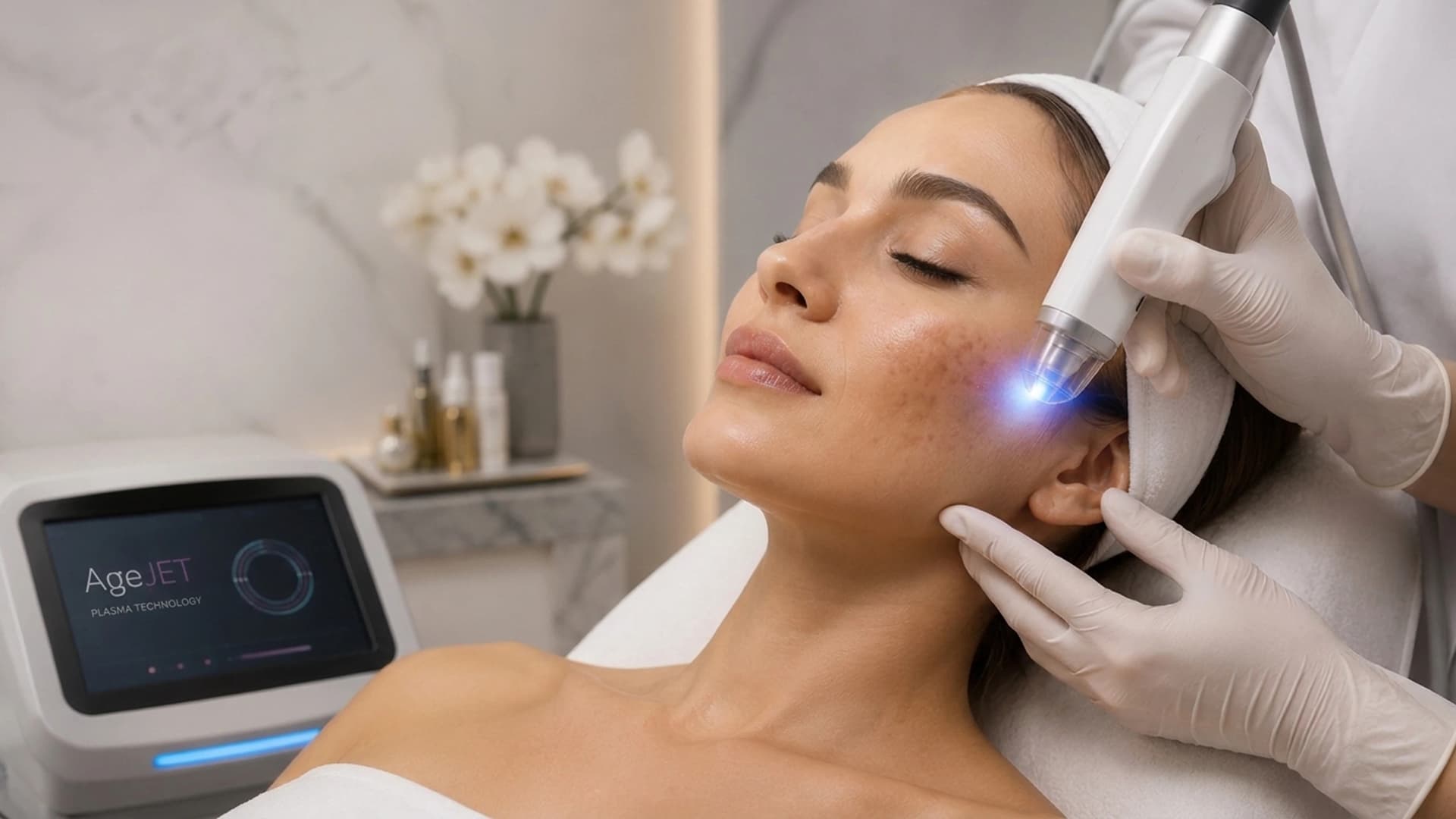
Hyperpigmentation Treatment in Newport Beach: Laser, AgeJET & Results
Laser, AgeJET, recovery, and expected results for uneven tone and dark spots.
Start Here
Ready to build your skin rejuvenation plan?
Book a consultation at Grey Aesthetics in Newport Beach and get a specific answer on which treatments your skin needs, and in what order.