How Do Exosomes Work for Skin and Hair?

Exosomes work for skin and hair by delivering protein and RNA signals that prompt existing cells to repair themselves, not by replacing cells. Grey Aesthetics, a Newport Beach medical spa, uses them after microneedling. The skin case is stronger than the hair case, which still leans on lab and animal work.
How do exosomes work on skin and hair?
Exosomes are tiny vesicles that cells release to talk to one another. A review in regenerative medicine, The Potential of Exosomes in Regenerative Medicine and in the Diagnosis and Therapies of Neurodegenerative Diseases and Cancer, puts their size at 30 to 150 nanometers. It describes them as lipid bilayer packages carrying proteins, nucleic acids, growth factors and cytokines.
Exosome: a cell-secreted vesicle that transfers bioactive cargo to a recipient cell and changes how it behaves.
How the cargo gets in
A review of exosomes in skin aging says recipient cells take them up through endocytosis, membrane fusion or receptor binding. Once inside, microRNA can bind target messenger RNA and shift which genes a cell expresses. Think of it as a sealed letter dropped through a cell’s door: the cell still decides what to do with the instructions.
What the signal is reported to do
In skin, the same review reports more cell proliferation, less oxidative stress and more collagen synthesis. In ultraviolet-irradiated fibroblasts, umbilical cord stem cell exosomes raise type I collagen and lower MMP-1, an enzyme that breaks collagen down.
In hair, a review of exosomes in hair growth and alopecia reports that exosomes from dermal papilla cells and mesenchymal stem cells promoted hair growth in animal and cellular studies. Clinics describe the mechanism as reactivating dormant follicles and prolonging the anagen (active growth) phase. Nothing living is added, so the result depends on cells that are still capable of responding.
What does the evidence show for skin versus hair, and what is still unproven?
Skin has the more plausible case. Reported uses center on fine lines, texture, pigmentation, scarring and post-procedure healing. The mechanism there is well described in cell work, though trials in people that settle how much visible change to expect remain thin.
Some patients describe exosomes as a route to subtle enhancements or a “liquid facelift.” The research does not support that framing. Exosomes signal repair and support gradual biological change. They do not add the immediate volume that Grey Aesthetics attributes to hyaluronic acid filler.
Skin: promising, mostly mechanistic
Collagen and elastin stimulation is the headline claim. An early adopter here is often someone addressing early signs of aging or hair thinning, or someone who prefers natural, non-invasive care. Grey Aesthetics lists the reasons and says regenerative results build gradually and are personalized to a patient’s biology, goals and health history.
Hair: biology is suggestive, human proof is not there yet
A scoping review of exosome delivery for alopecia screened 803 citations after removing duplicates and kept 16 studies. They mixed animal and human work across injection, microneedle patches and topical delivery, and ranged from hair follicle regeneration to wound healing. That is a map of early research. It does not show that exosomes regrow hair in people.
Quality is the other open question. Products differ by source (human, animal or plant), and clinic claims vary widely. Exosomes are also usually paired with PRP, microneedling or growth-factor serums, so a good result cannot be credited to exosomes alone.
| Question | Skin | Hair |
|---|---|---|
| Plausible mechanism | Collagen, elastin, oxidative stress | Follicle activation, longer anagen phase |
| Strongest evidence | Cell studies, post-procedure use | Animal and cell studies |
| Human proof of visible change | Limited | Limited |
| Usually combined with | Microneedling, RF microneedling | Growth-factor serums, PRP |
What does an exosome treatment involve, and how much does it cost?
At Grey Aesthetics, exosome therapy is most often applied topically right after microneedling or RF microneedling. The micro-channels let the product travel deeper, and providers recommend a delivery method based on goals. Exosomes can also be used as a standalone topical in select cases.
On the scalp, they may be applied alongside a growth-factor serum such as Kerafactor to support follicle response. Recovery is usually light. The American Academy of Facial Plastic and Reconstructive Surgery overview says treatment is often completed in under an hour, with possible short-lived redness or swelling. For what a session looks like and the results to expect at 6 weeks and 3 months, see our guide to exosome therapy in Newport Beach.
If you are weighing this, you can ask Grey Aesthetics whether exosome therapy fits your goals during its complimentary consultation.
How it sits next to PRP
According to Grey Aesthetics, PRP uses your own blood, with platelets concentrated 5 to 10 times above baseline. Typically you’ll see 1 to 3 days of downtime and 2 to 3 sessions for visible results. Those figures are specific to PRP. Exosomes are cell-derived vesicles rather than platelets, so the two are different tools that are often layered. Grey Aesthetics describes PRP and exosomes working together in a regenerative protocol.
What drives the price
Exosome products range from less than $20 to several hundred dollars per unit. That spread reflects source and purity. According to Bioscience Institute, cost also depends on treated area, delivery method, session count and maintenance.
What to ask before booking
- Where do the exosomes come from (human, animal or plant)?
- How are they tested and characterized?
- Who administers them, and under what physician oversight?
A related option for texture and repair is Rejuran Healer, and for tone concerns LaseMD Ultra. Those work by different routes, so compare goals before choosing.
Final Thoughts
Exosome therapy represents an exciting development in regenerative aesthetics, offering a promising approach to supporting skin rejuvenation and hair restoration. By delivering biological signals that influence existing cells, exosomes may help support collagen production, improve skin texture and promote a healthier scalp environment. Grey Aesthetics combines exosome therapy with treatments such as microneedling, RF microneedling and PRP to provide personalized options for individual skin and hair concerns.
Whether you are looking to address early signs of aging, improve skin quality or explore solutions for thinning hair, the Grey Aesthetics team can help you understand the available treatment options and their potential benefits. As clinical research continues to evolve, choosing an experienced medical aesthetics provider and understanding the evidence behind each treatment are essential.
Discover the potential of regenerative aesthetics with Grey Aesthetics. Book a complimentary consultation today and explore a personalized approach to healthier-looking skin and hair.
FAQs
Do exosomes regrow hair?
How are exosomes different from PRP and stem cells?
How long do results take?
Are exosomes safe?
Is it worth paying more for a higher-priced product?
Can I use exosomes without microneedling?
Who should be cautious?
Keep Reading
Related Articles

Exosome Therapy in Newport Beach for Skin and Hair: Benefits & Results
The skin and hair results to expect by week 6 and month 3, and how a session works.

How Does PRP Skin Rejuvenation Improve Skin Texture and Collagen?
How growth factors from your own blood signal new collagen, and what the evidence shows.
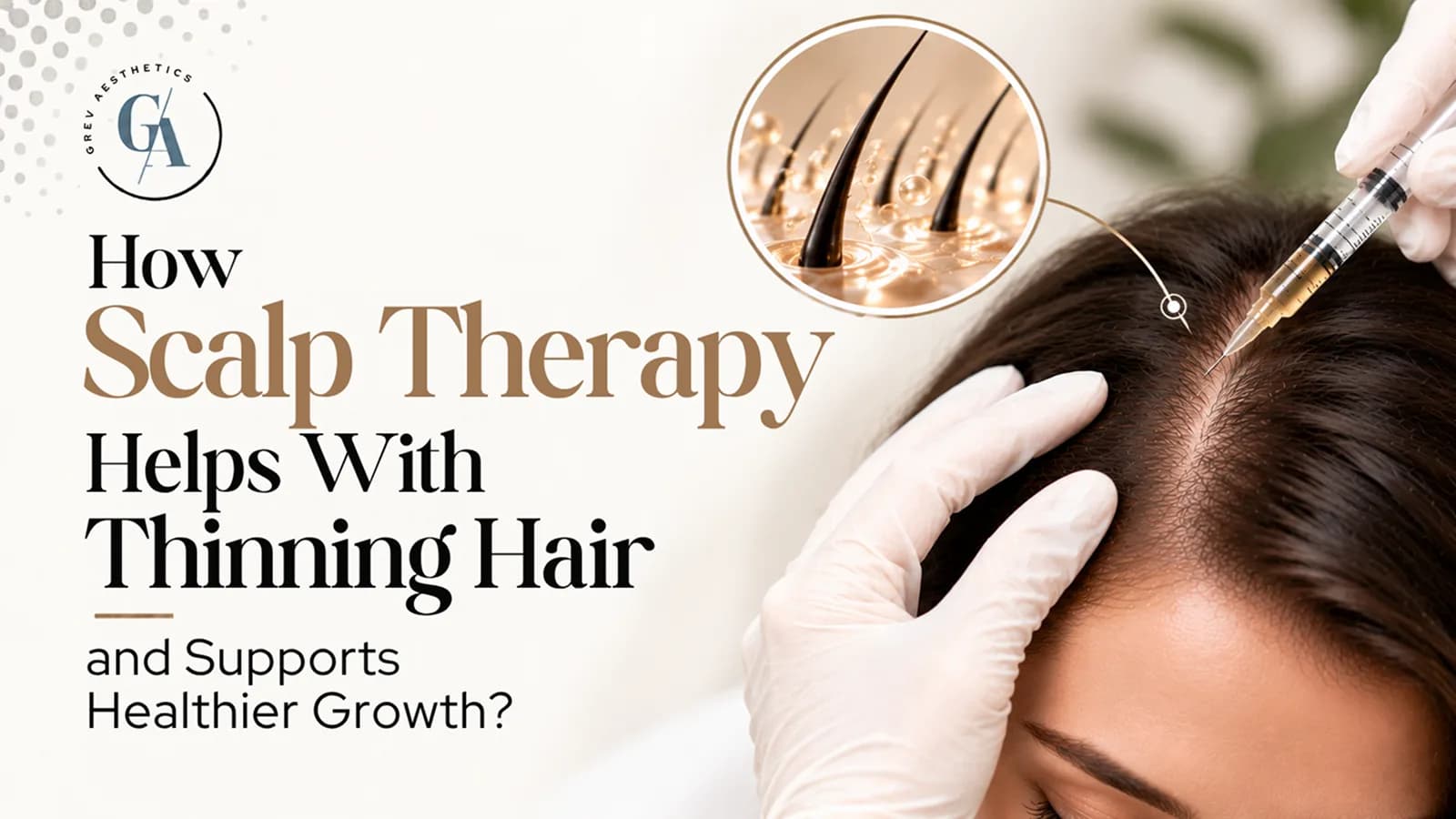
Does Scalp Treatment Work for Thinning Hair (Men and Women)?
How scalp analysis, cleansing and growth-factor serums support thinning hair.
Start Here
Ready to explore regenerative aesthetics?
Book a complimentary consultation and the Grey Aesthetics team will help you understand which exosome, microneedling or PRP approach suits your skin and hair.