4 Ways to Treat Thinning Hair Before It Gets Worse
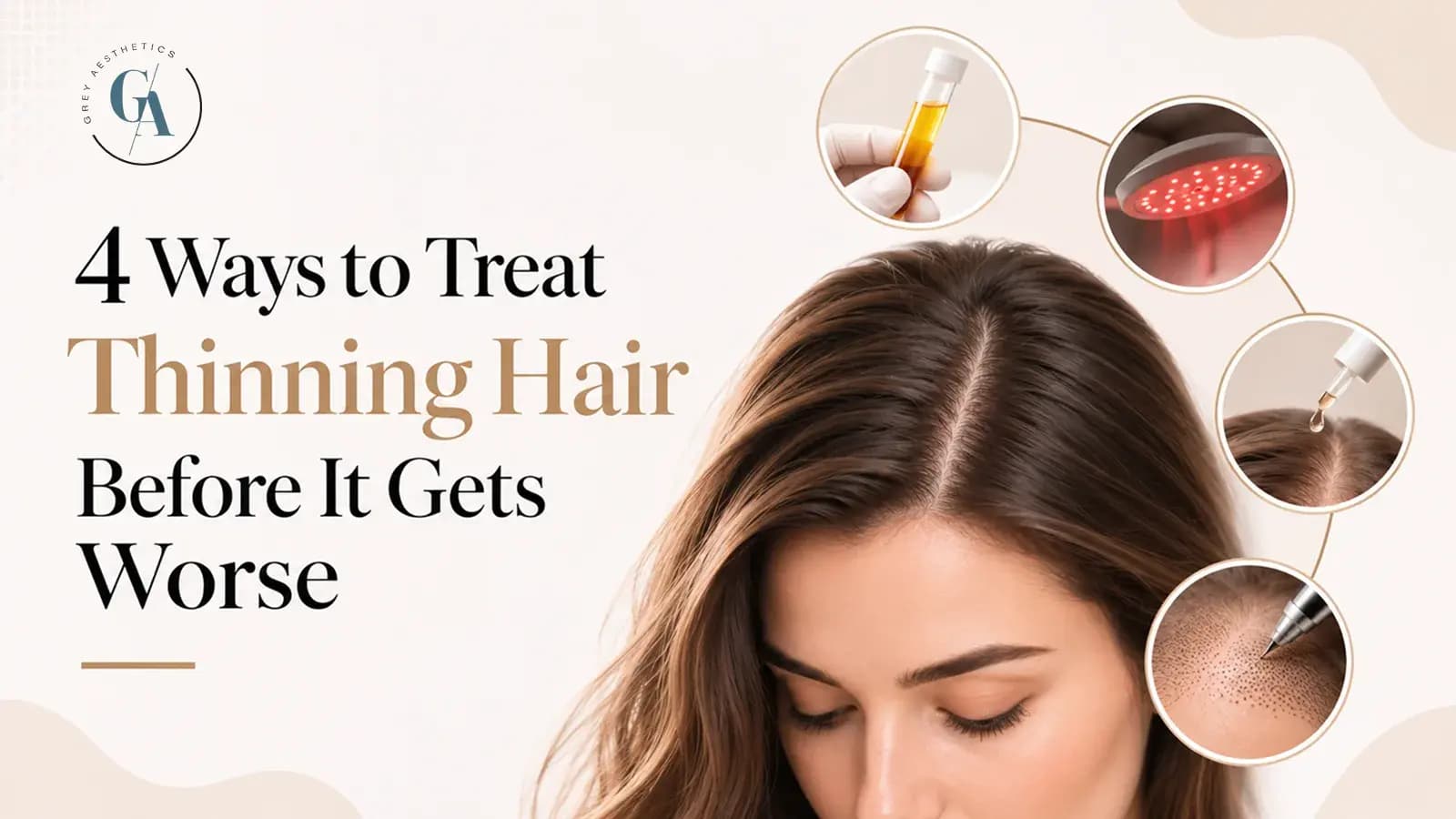
Four proven ways to treat thinning hair are PRP injections, low-level laser or red light therapy, professional scalp treatments and scalp micropigmentation. Grey Aesthetics offers scalp treatments, including Kerafactor and Keravive, in Newport Beach. Which one works depends on the cause, so start there.
Is your hair actually thinning, and what’s behind it?
Losing 50 to 100 hairs a day is normal, per Healthline’s 2018 guide. A wider part or a smaller ponytail signals it’s time to act.
Two conditions account for most age-related loss, according to Harvard Health: androgenetic alopecia (inherited pattern thinning) and telogen effluvium (shedding after a trigger such as illness or stress). Telogen effluvium usually improves in three to six months once the cause is treated. Pattern thinning does not fix itself.
Tight hairstyles, harsh products, nutrient deficiencies, hormonal shifts and chronic stress also contribute. The cause decides the treatment: a shedding episode needs patience, while pattern loss needs an ongoing plan. Have a clinician confirm which you have before spending money. If injections are on the table, ask how PRP injections fit your pattern of loss.
What are the 4 ways to treat thinning hair, and which work best?
The evidence behind these options differs in kind, so this guide describes each rather than claiming one definitive ranking. For follicle-level options, a Grey Aesthetics new patient visit starts with a scalp evaluation.
Two pharmacy options sit outside this list but are worth knowing. Harvard Health notes over-the-counter topical minoxidil (Rogaine) is FDA-approved for men and women, and it must be used daily for at least six to nine months. Mayo Clinic describes finasteride as a prescription tablet for male pattern loss that women and children should not use. Women who want a non-prescription route can ask about minoxidil first.
1. PRP injections
Platelet-rich plasma (PRP) concentrates growth factors from your own blood and injects them into the scalp. The American Hair Loss Association says the evidence of benefit is credible but its size and durability vary, citing a 2025 review of 43 randomized trials with 1,877 participants.
Scalp results are most noticeable after six months and are not permanent. Grey Aesthetics lists 3 to 4 initial sessions as typical for hair.
2. Low-level laser or red light therapy
Low-level laser therapy (LLLT) acts on the tiny capillaries feeding follicles, according to the International Society of Hair Restoration Surgery. Its doctors say combining FDA-cleared treatments works better than using one alone.
Dr. Leonard, quoted by the society, reports a 90% stabilization rate and measurable regrowth in 60% of patients. Those are his reported results, not a guarantee for every user. LLLT suits people who want a drug-free layer and have the patience for regular sessions.
3. Professional scalp treatments
Grey Aesthetics offers three, and these specifics are the provider’s own claims. Keravive is a needle-free, FDA-cleared HydraFacial scalp treatment lasting 30 to 45 minutes. Kerafactor is a drug-free growth-factor serum, and its at-home bottle costs $174 for 50ml.
KeraLase pairs a laser with that serum. The practice says most patients notice less shedding within four to eight weeks, and fuller density by three to six months. These suit early thinning where follicles are still active. For a step-by-step look at how these sessions work, read how scalp therapy helps thinning hair.
4. Scalp micropigmentation
Scalp micropigmentation (SMP) is cosmetic, not regrowth. A practitioner applies pigment dots to the scalp to mimic density. Medical News Today says it may suit pattern hair loss or alopecia, and that sessions can run 2 to 4 hours.
| Option | Evidence level | When you may see change | If you stop |
|---|---|---|---|
| PRP injections | Credible, variable | About 6 months | Not permanent |
| Low-level laser or red light therapy | Moderate, best combined | Varies | Maintenance needed |
| Professional scalp treatments | Provider-reported | 4 to 8 weeks for shedding | Maintenance every 3 to 6 months |
| Scalp micropigmentation | Cosmetic camouflage | After sessions | Not applicable |
What can you do at home today that helps, and what’s a waste of money?
Scalp massage is cheap and low risk. Healthline suggests small circles with the fingertips, light to medium pressure, for at least 5 minutes several times a day.
A small PMC study of nine men found hair thickness rose from 0.085 mm to 0.092 mm after 24 weeks of daily four-minute massage. That’s a modest result from a tiny sample, so treat massage as support, not a cure. Easing tight styles and harsh products costs nothing and removes a real trigger.
Biotin is the common waste. Mayo Clinic says deficiency is rare and hair-loss claims are unproven, so it only helps if you are genuinely deficient. Essential oils also lack enough human evidence, and the FDA does not regulate their purity, per Healthline. If you have tried a product and want to share how it went, you can rate your visit after any treatment.
How do you choose a treatment and know it’s working?
Match the cause to the first step. Early pattern thinning points to an over-the-counter option or a scalp evaluation; progressing loss justifies a dermatologist visit about prescriptions or PRP. A congested or inflamed scalp points to a scalp treatment.
Judge nothing before 3 to 4 months. Take a monthly photo of your part line in the same light, because memory is a poor measuring tool for slow change.
Be honest about commitment: most gains fade when treatment stops. See a doctor sooner for sudden or patchy loss, which can signal conditions such as alopecia areata. When regrowth falls short, scalp micropigmentation is a cosmetic option.
Final Conclusion
Thinning hair doesn’t have to mean accepting permanent hair loss. With the right diagnosis and a personalized treatment approach, it is possible to address early hair thinning and improve scalp health. Grey Aesthetics offers a range of hair-restoration solutions, including PRP injections, Keravive, Kerafactor and KeraLase, designed to support healthier-looking, fuller hair. Its physician-guided approach helps patients explore suitable options based on their individual hair concerns and restoration goals. Whether you are experiencing early thinning or looking for ways to improve hair density, taking action early can make a difference. Book a complimentary hair restoration consultation with Grey Aesthetics and take the first step towards healthier-looking, more confident hair.
FAQs
How long before I know if a hair treatment is working?
Does minoxidil work for women?
Will hair loss return if I stop treatment?
Is PRP worth it for thinning hair?
Should I take biotin for thinning hair?
Can a scalp treatment replace minoxidil?
When should I see a doctor instead of trying products?
Keep Reading
Related Articles
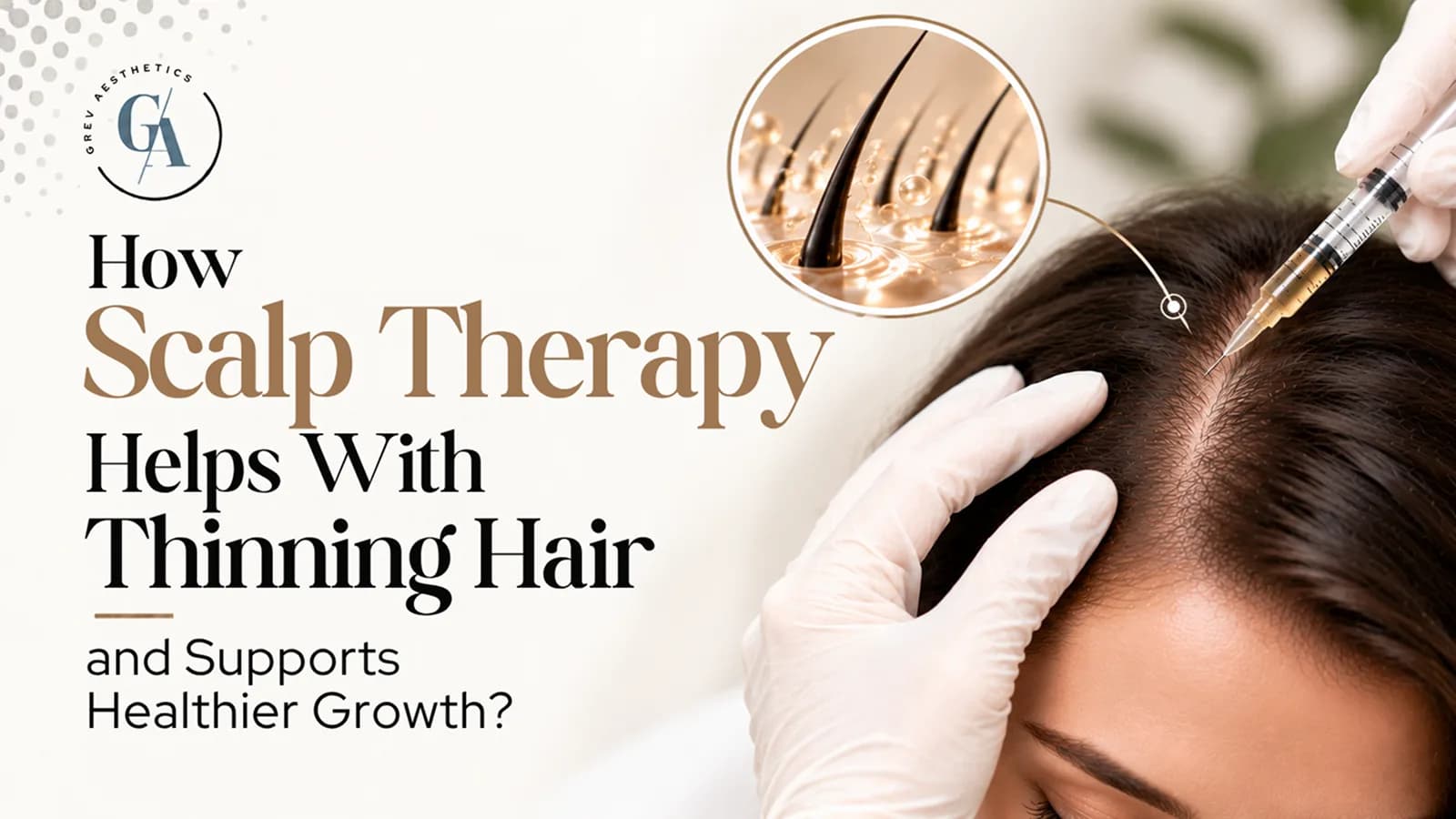
Does Scalp Treatment Work for Thinning Hair (Men and Women)?
How scalp analysis, cleansing and growth-factor serums wake dormant follicles.
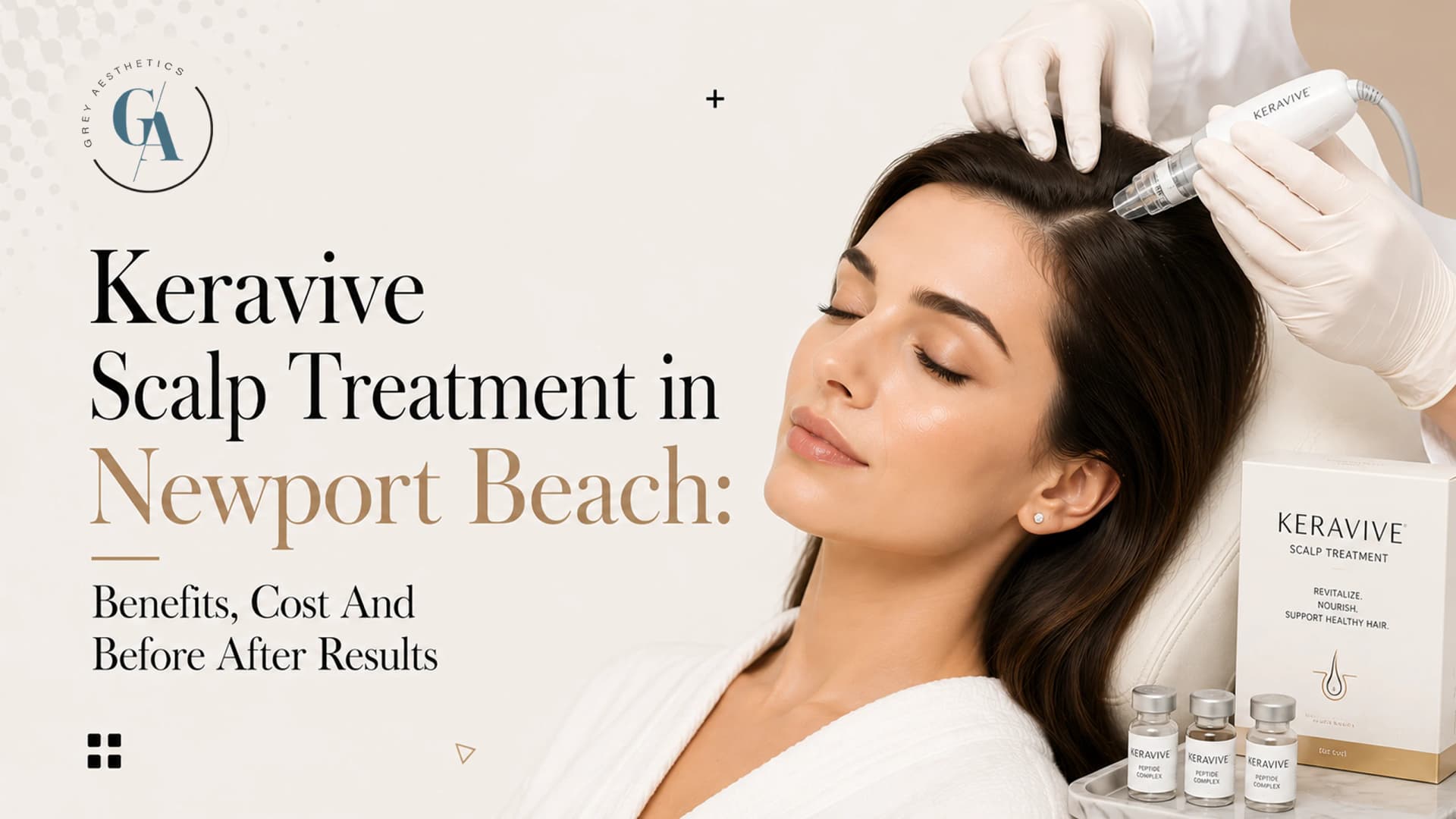
Keravive Scalp Treatment in Newport Beach: Benefits And Before After Results
How the three-step Keravive protocol cleanses, exfoliates and nourishes the scalp.

How Do Exosomes Work for Skin and Hair?
How exosome signals prompt repair, and why the hair evidence still leans on animal studies.
Start Here
Ready to act before thinning gets worse?
Book a complimentary hair restoration consultation and the Grey Aesthetics physician team will help you choose a plan, with no pressure to commit.